The SUDECU (SUstainable DEmocratic CUlture) project aims to anchor democracy and sustainability as an element of everyday culture, as the acronym makes clear. SUDECU is being implemented in North Macedonia because of the multi-ethnic and multilingual (several national languages) context, which is comparable to Switzerland.
With SUDECU, the aims and objectives of the reference framework on competences for a democratic culture (RFCDC – www.coe.int) promoted by the Council of Europe are used and implemented in an exemplary manner. At the same time, the project serves as a pilot project to strengthen lived elements of sustainability and democracy in international education projects and to develop recommendations for the possible further development of existing reference concepts.
Save Green
Skopje Projects
01
Kumanovo Projects
02
Kriva Palanka Projects
03
Step #1
Awareness Creation
It is a long established fact that a reader will be distracted by the readable content of a page.
Step #2
Eco Development
It is a long established fact that a reader will be distracted by the readable content of a page.
Step #3
Cleaning Environment
It is a long established fact that a reader will be distracted by the readable content of a page.
The implementation approach of peer learning is innovative for the project country. The basic understanding of learning in the chosen region of the Western Balkans has changed in recent years. However, this understanding must be shifted from ‘knowledge’ to ‘ability’. Learning processes – if they are to be lifelong – must address the question of how learners of all ages determine and approach their own learning processes.
The search for answers to this question is called self-regulated learning. Self-regulation is understood as a proactive activity by which learners help themselves to learn, e.g. by applying a strategy, rather than a passive response, e.g. by absorbing knowledge from a teacher. Second, self-regulation researchers do not limit their vision of self-regulation to individualized forms of learning, such as discovery learning, self-education through reading or computer-assisted instruction. Instead, they also include social forms of learning, such as seeking help from peers.
This is where SUDECU comes in its implementation approach: All learning activities are realized in concrete terms by peers who are trained for this methodically and in terms of content within the framework of the project. This applies to all target groups, i.e. young people and parents. This approach meets a need for both the basic assumption of a sustainable, participatory democratic society and an understanding of personal and social development. The aim is to strengthen a democratic culture that is tested and suitable for everyday life in the sense of the objectives intended by the Council of Europe for all member countries.
Project Aim:
Integrate democracy and sustainability into everyday culture in North Macedonia.
Framework Application:
Utilize the Council of Europe's RFCDC to enhance democratic and sustainable practices.
Innovative Learning:
Implement peer learning to promote self-regulated learning and social development.
Target Audience:
Focus on young people and parents for democratic culture training.
Local Engagement:
Support local projects to foster peaceful, inclusive, and sustainable societies.
Achievements of the SUDECU Project
Integrated Democratic Culture: Successfully embedded the principles of democracy and sustainability into everyday practices in North Macedonia.
Educational Impact: Developed recommendations for improving existing reference concepts and strengthened the lived elements of sustainability and democracy in education.
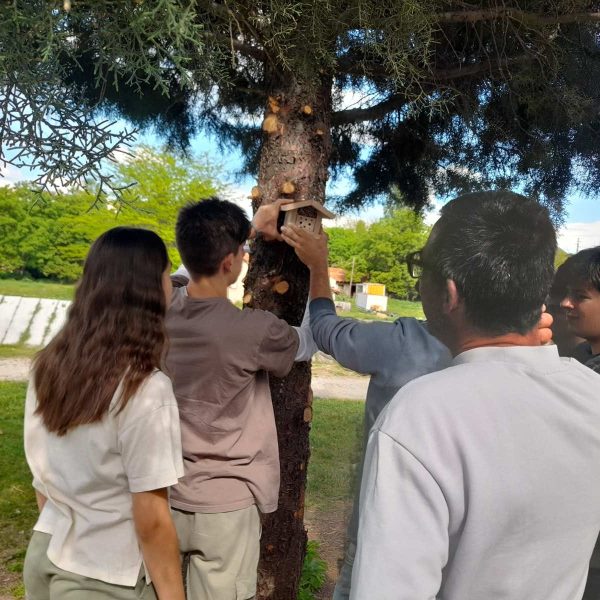
Community Engagement: Initiated and supported local projects, fostering peaceful, inclusive, and sustainable communities.
Green Event Planting
Purposeful Cooking
Urban Green Space
Supporting UN health and hunger goals
Creating a cleaner and greener environment
Using green spaces in the city
Graffiti and Murals: Capturing Skopje's Artistic Identity